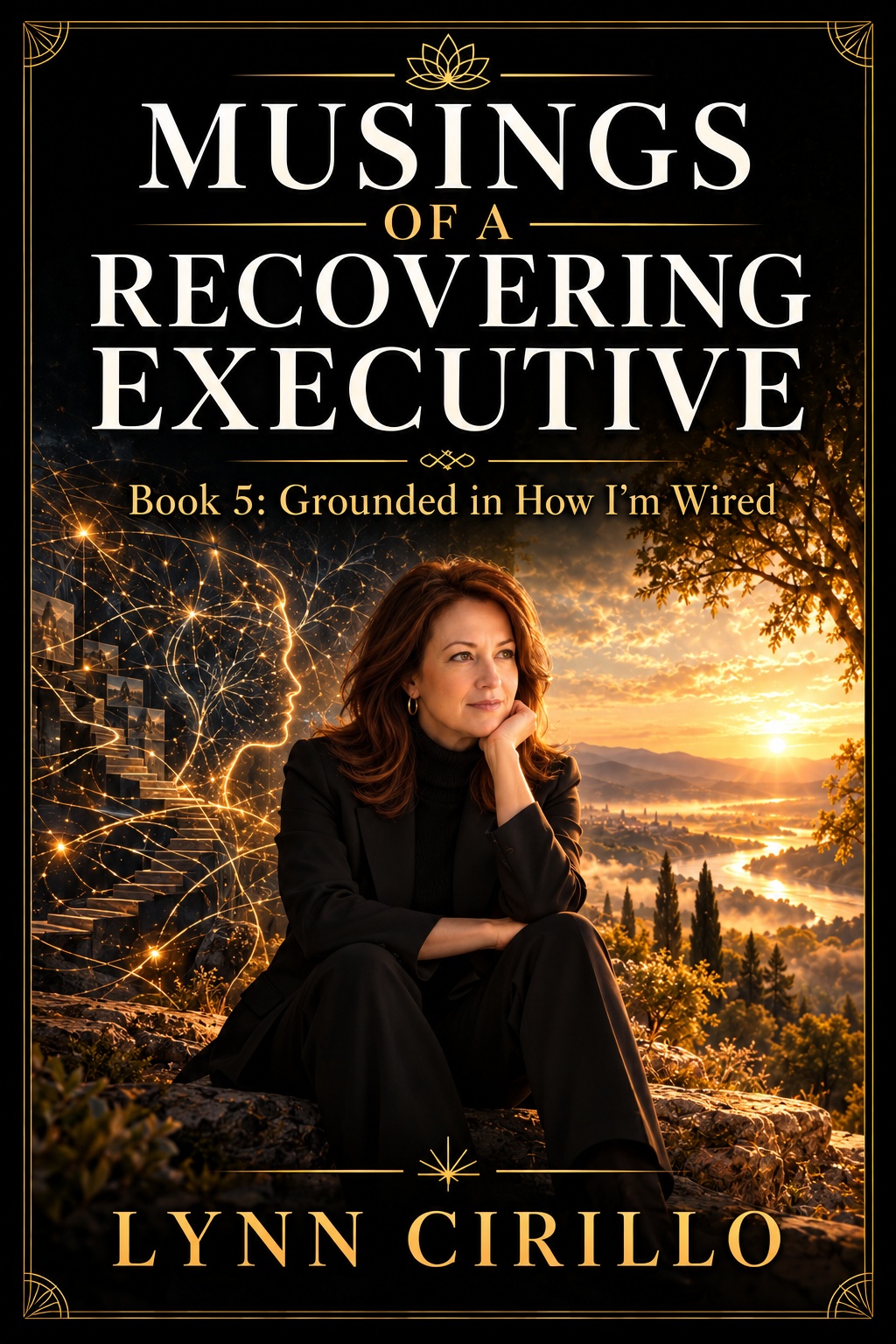
Book 5 / Musings of a Recovering Executive

Grounded in How I’m Wired

What does being neurodivergent mean for how you work, learn, communicate, and belong?

Grounded in How I’m Wired by Lynn Cirillo, Book 5 of Musings of a Recovering Executive

By Lynn Cirillo

Understanding yourself as a neurodivergent person.

You can be capable and still struggle to begin a task. You can appear organized while relying on systems nobody sees. You can work well with music and find another sound almost impossible to ignore. From the outside, those experiences may look inconsistent. From the inside, they have a cost.

In Grounded in How I’m Wired, Lynn Cirillo explores the lived experience of being neurodivergent through her own experiences with ADHD, OCD, and dyslexia, the adaptations she developed before understanding them, and the questions her daughter's journey prompted her to ask. Work, learning, communication, sensory input, identity, and belonging all become part of that inquiry.

Across fourteen chapters, personal stories sit alongside guidance tools, communication tools, and introspective questions. The book invites you to observe what helps, what creates friction, and what your usual strategies require of you—then experiment with approaches that respect how you function.

Buy on Amazon

Inside the book

Recognition, practical experiments, and words for what you need.

The book moves through Recognition, Redesign, and Release. Its focus is understanding yourself as a neurodivergent person, with room for different experiences, different needs, and tools that work differently for different people.

Recognition

Notice what the appearance of being fine can hide.

The early chapters examine correction, learning to compensate, and masks that make difficulty less visible. Lynn asks how other people's judgments can become the explanations we use for ourselves, and why successful performance tells us so little about the effort behind it.

Redesign

Find another way into the task.

Chapters explore how you learn, unnecessary friction, difficulty getting started, asking for support, communication misunderstandings, and sensory input. Tools invite experiments with environment, written information, checkpoints, processing time, and ways of describing a need without beginning with self-criticism.

Release

Build from what you learn about yourself.

The later chapters return to the cost of masking, the difference between fitting in and belonging, and the practice of trusting your observations. They encourage you to reconsider old judgments while continuing to take responsibility for your impact, your needs, and what helps you function.

Who it’s for

For neurodivergent people who have become very good at appearing fine.

You may recognize yourself in these pages, or you may come to them wanting to understand someone whose experience differs from yours.

What you can take from it

Tools you can try. Language you can adapt.

Each chapter brings together lived experience, Guidance Tools: Navigating How You're Wired, Communication Tools: Putting Needs Into Words, and Introspective Questions. The practical sections help you investigate a specific difficulty, try a change, and notice both the result and the energy it requires.

The communication tools offer starting points for explaining what is happening, how it affects you, what helps, and what you are requesting. Examples include asking for written instructions, processing time, a different demonstration, or a conversation about support. Leaders and others receiving a request are invited to listen carefully and keep meaningful outcomes in view.

This is a book of personal experience, reflection, and practical exploration. It is not a diagnostic tool or a universal guide to neurodivergence. You are invited to use what helps, question what does not, and seek appropriate professional guidance when needed.

A passage from the book

“You were never meant to overcome how you’re wired. You were meant to understand it well enough to build with it.”

LYNN CIRILLOClosing reflection

Grounded in How I’m Wired

What helps you do this well?

Start with your own observations, and give them room to teach you something.

Buy on Amazon

Continue the journey

Where the conversation goes next.

The series continues with You’re Not Imagining It, the sixth book, now available on Amazon, examining toxic environments and the patterns that can make people question themselves.