Leadership & Workplace Culture · Curiosity & Self-Awareness
When Professionalism Becomes Self-Editing
Softening concerns and trimming opinions can become second nature. A reflection on self-trust, authenticity, and the difference between adaptation and alignment.
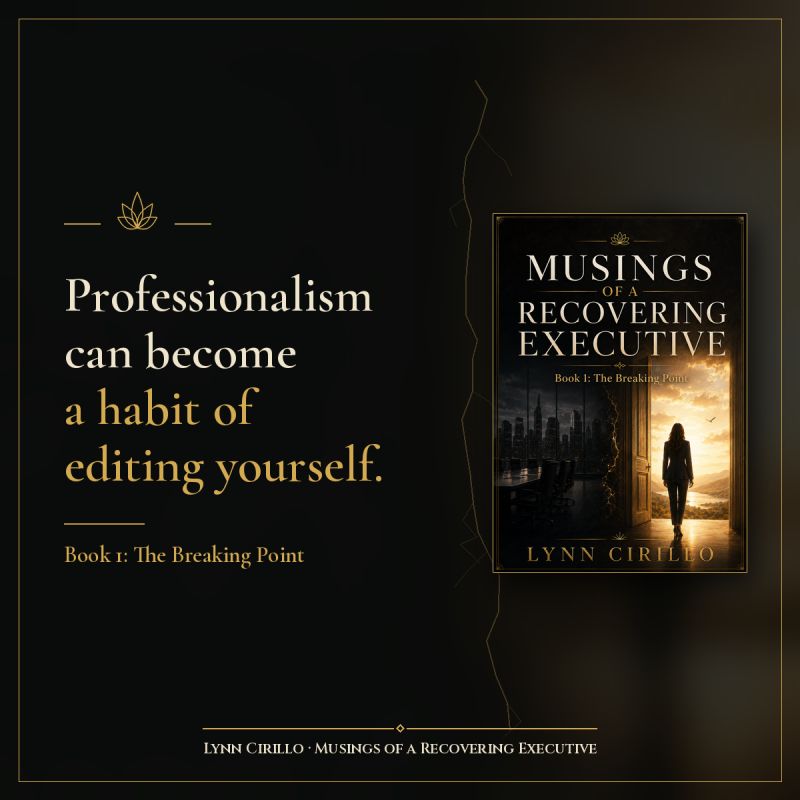
Professionalism can quietly become a habit of editing yourself.
Soften the concern. Trim the opinion. Lead with the part the room will agree with.
I know that habit from the inside. Over time, I noticed how often I edited myself mid-thought. How quickly I redirected questions that might complicate things. How easily I absorbed tension rather than naming it.
Each edit seems reasonable on its own. That's what makes the habit so hard to see.
In The Breaking Point, I write about where it can lead: the erosion of self-trust. Spend enough years adjusting what you say to fit the room, and it gets harder to hear what you actually think.
There's a difference between adaptation and alignment.
Adaptation asks, "What will work here?"
Alignment asks, "Is this still true to me?"
Adaptation is a real skill. It gets a lot of capable people through a lot of difficult rooms. But adaptation without alignment carries a cost, and that cost never shows up on a performance review.
The best career advice I ever received was to always be my true, authentic self. I'm still learning how much practice that takes.
What's one thing you've been editing out that deserves to be said?
#leadership #authenticity #workplaceculture #thebreakingpoint #musingsofarecoveringexecutive
Join the conversation on LinkedIn ↗
Personal reflections by Lynn Cirillo. About this writing.