Neurodiversity · Curiosity & Self-Awareness
You Don't Need Permission to Notice Yourself
For women wondering about ADHD later in life: validation for the patterns you’ve noticed, and three practical ways to begin understanding your brain.
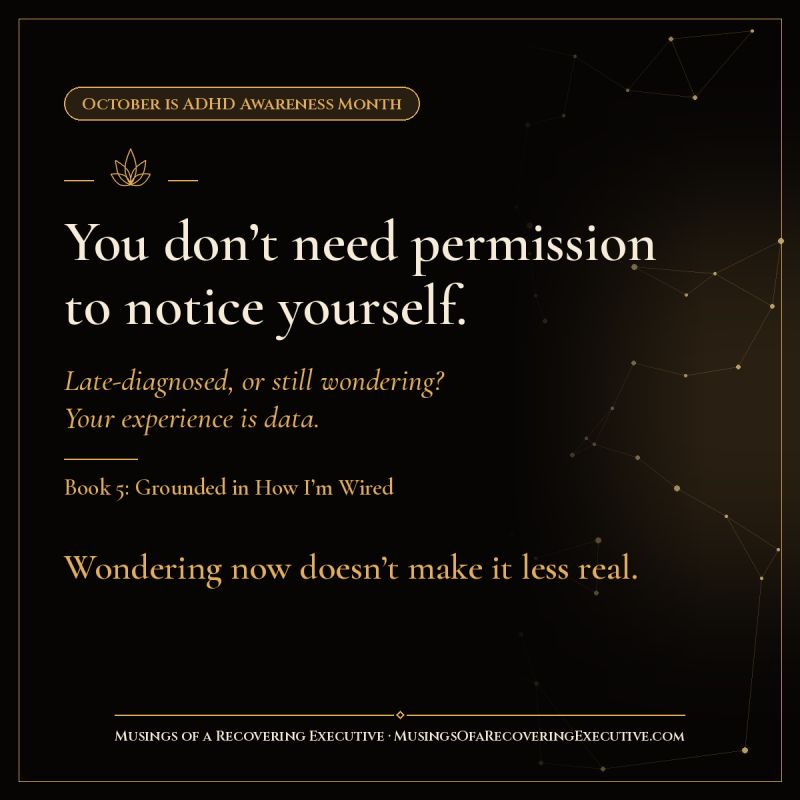
"Is this real? Am I making an excuse? Shouldn't I be able to handle this?"
If you're a woman who started wondering about ADHD in your 30s, 40s, 50s or later, you may know those questions well.
Many women spend decades compensating so well that nobody looks closer. Not teachers. Not bosses. Sometimes not even ourselves.
So here's your validation: wondering now doesn't make it any less real. Your experience doesn't need anyone else's permission to count.
In Grounded in How I'm Wired, I wrote: "You don't need permission to notice yourself."
A diagnosis can be enormously valuable. It can bring language, validation, treatment options and access to accommodations. Professional evaluation matters. But you can start understanding your brain today.
3 ways to begin:
1. Treat your experience as data. "I leave certain rooms completely depleted" is information.
2. Observe before you explain. Write the pattern down before deciding what it means.
3. Bring your notes to a professional who evaluates adults. Patterns on paper make for a better conversation than "I just feel off."
What's one pattern you noticed about yourself long before you had a name for it?
If this sounds like you, Book 5 was written for you. It gives you two things: validation for what you've been carrying, and practical tools you can test this week. Links are in the first comment.
#adhdawarenessmonth #latediagnosedadhd #adhd #neurodiversity #musingsofarecoveringexecutive
Join the conversation on LinkedIn ↗
Personal reflections by Lynn Cirillo. About this writing.